A Guide to Biophilic Design Kitchens
A Guide to Biophilic Design Kitchens
What is biophilic design?
Be honest – are you staring blankly at the screen and shrugging your shoulders looking a little non-plussed, right now?
Well, you wouldn’t be alone.
But, here’s the thing…
You do know what biophilic design is. You just don’t know you do.
We see it everyday. It’s all around us.
We also already have a pretty good idea why biophilic design is so important and how it makes us feel.
Which is weird because a lot of people wouldn’t be able to answer the question: What is biophilic design?
Confused? Well, let us explain.
In a few minutes, you’ll know everything you need to know about biophilic design.
And, most importantly, you’ll know everything you need to know about biophilic design kitchens.
You will know how to use biophilic design for your kitchen.
What is Biophilic Design?
Essentially, biophilic design is when nature, natural patterns, and the natural world are integrated into the design of buildings – exterior and interior – and spaces.
It is design that integrates natural light, natural materials, and the natural environment.
Any natural elements and natural features – as you will see from how many times ‘natural’ appears above – are the basis of biophilic design.
Natural Features and Natural Elements
It can be used on a large scale, such as with urban developments and town planning. Biophilic design has become an integral part of the design of new housing developments to new office spaces or shopping centres.
Of course, it can be used on a much smaller and individual scale too. Biophilic design principles have become a vital feature of contemporary interior design – and biophilic design thinking has now made it all the way to kitchen design.
Naturally, here at Kitchen Warehouse it is primarily with biophilic design kitchens, but it’s important to understand the bigger picture as well.
Then it will be clearer and easier to understand why incorporating biophilic design principles into your new kitchen design is such an appealing idea.
So, let the natural light in and let’s delve in…
Why is Biophilic Design Used?
Biiophlic design is intended to improve health and wellbeing, and to help boost creativity.
When used in wider developments – such as town planning – biophilic design benefits natural ecosystems and, ultimately, helps to improve the health of wellbeing of all the wildlife that surrounds us and the planet as whole. It has become an integral part of modern design that strives to bring green infrastructure to our built environments.
For interior spaces, such as offices, studies show that biophilic design boosts creativity and productivity, as well as wellbeing.
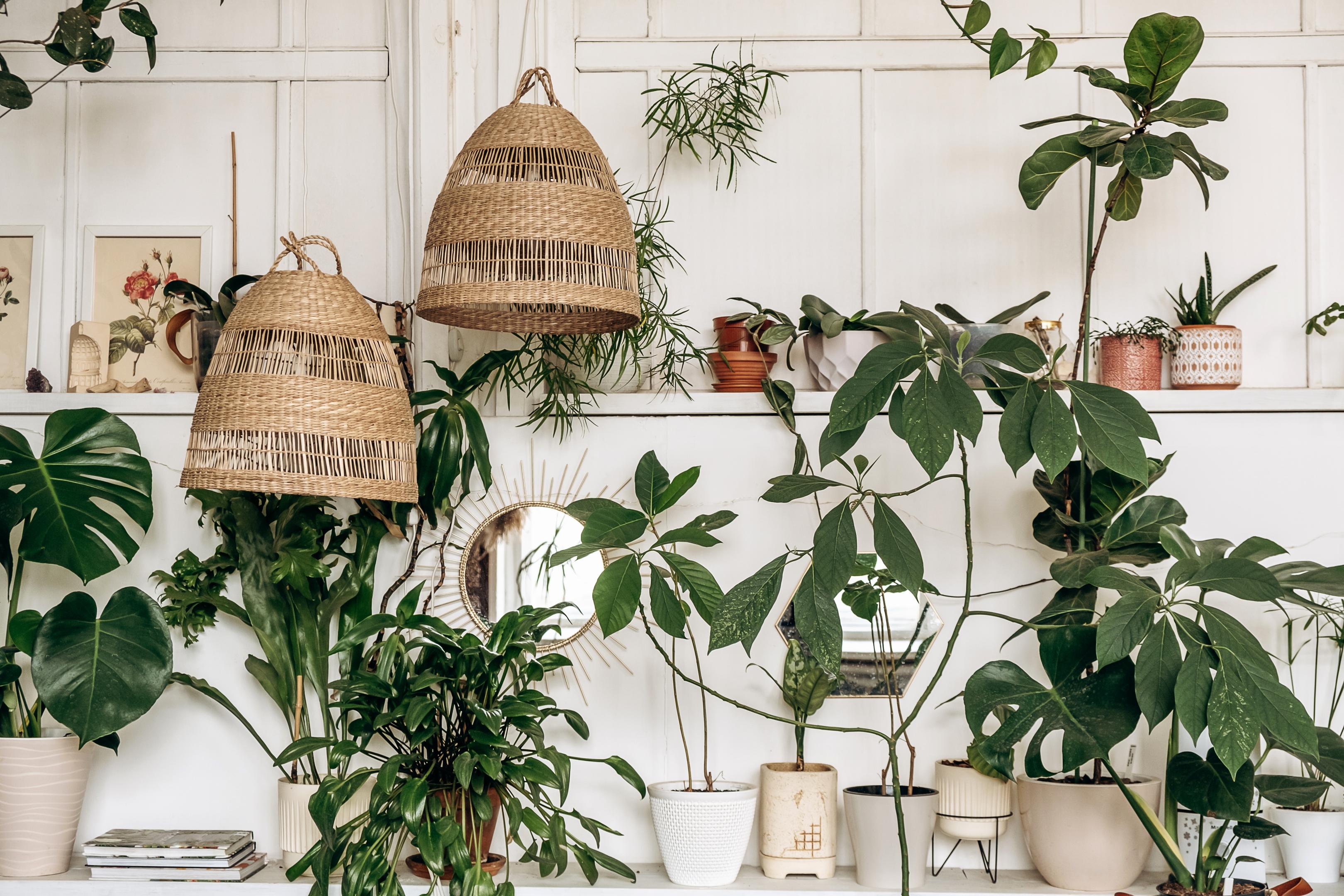
And in the home and garden, incorporating natural light and natural materials, greenery and water elements into designs can be a big boost for our physical and mental wellbeing – as well as being aesthetically pleasing.
But there’s more to biophilic design than green walls and water features.
The Key Benefits of Biophilic Design
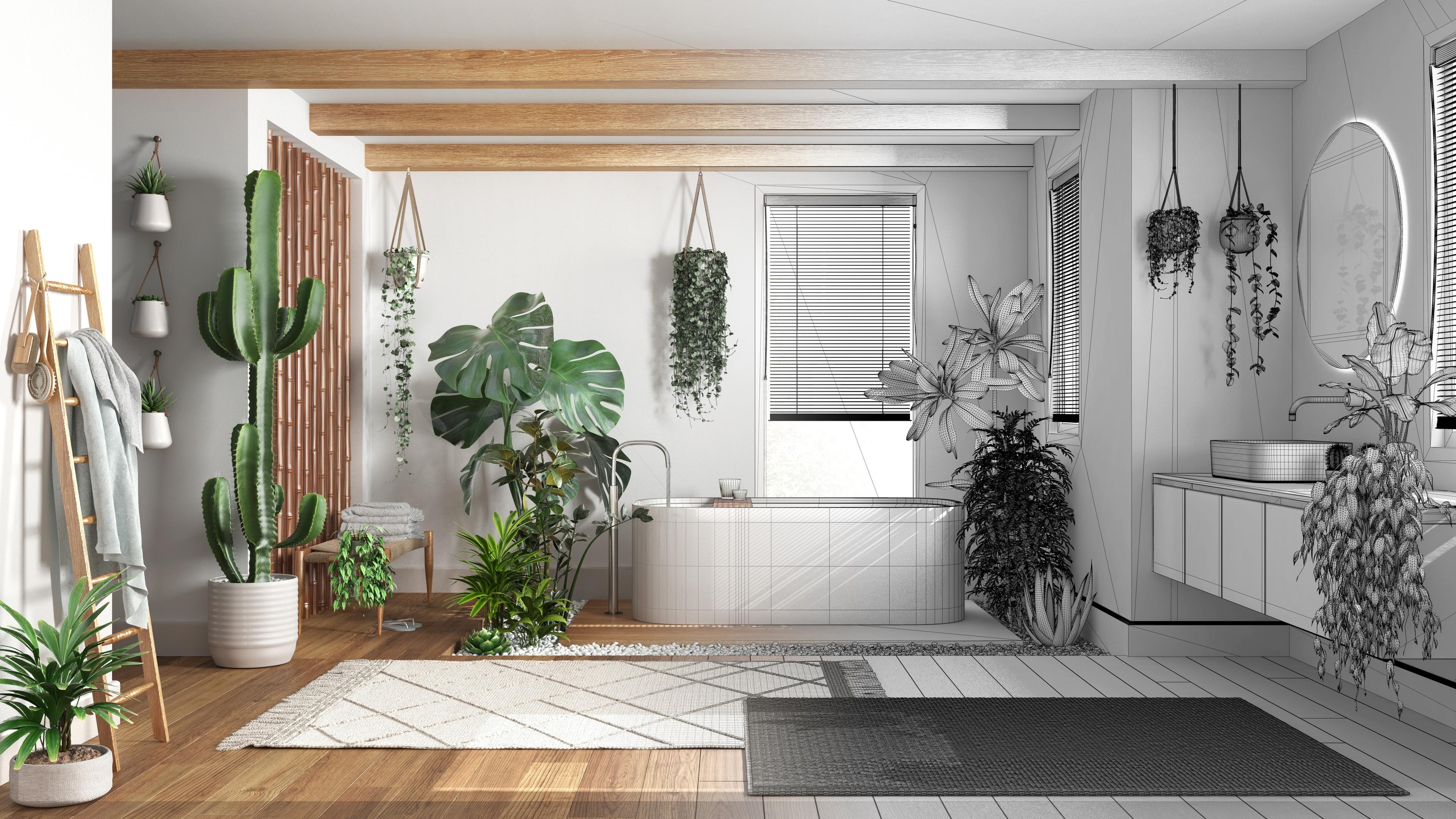
Biophlilic design helps to reduce stress. When we are surrounded by plants and water and are exposed to plenty of natural levels, our cortisol and anxiety levels are reduced.
Spaces inspired by nature enhance innovation, creativity and productivity. Being around daylight and fresh air in an environment featuring natural materials enhances mood and supports physical health.
Biophilic design can have benefits for the environment and mitigates climate change.
Typical Biophilic Design Elements
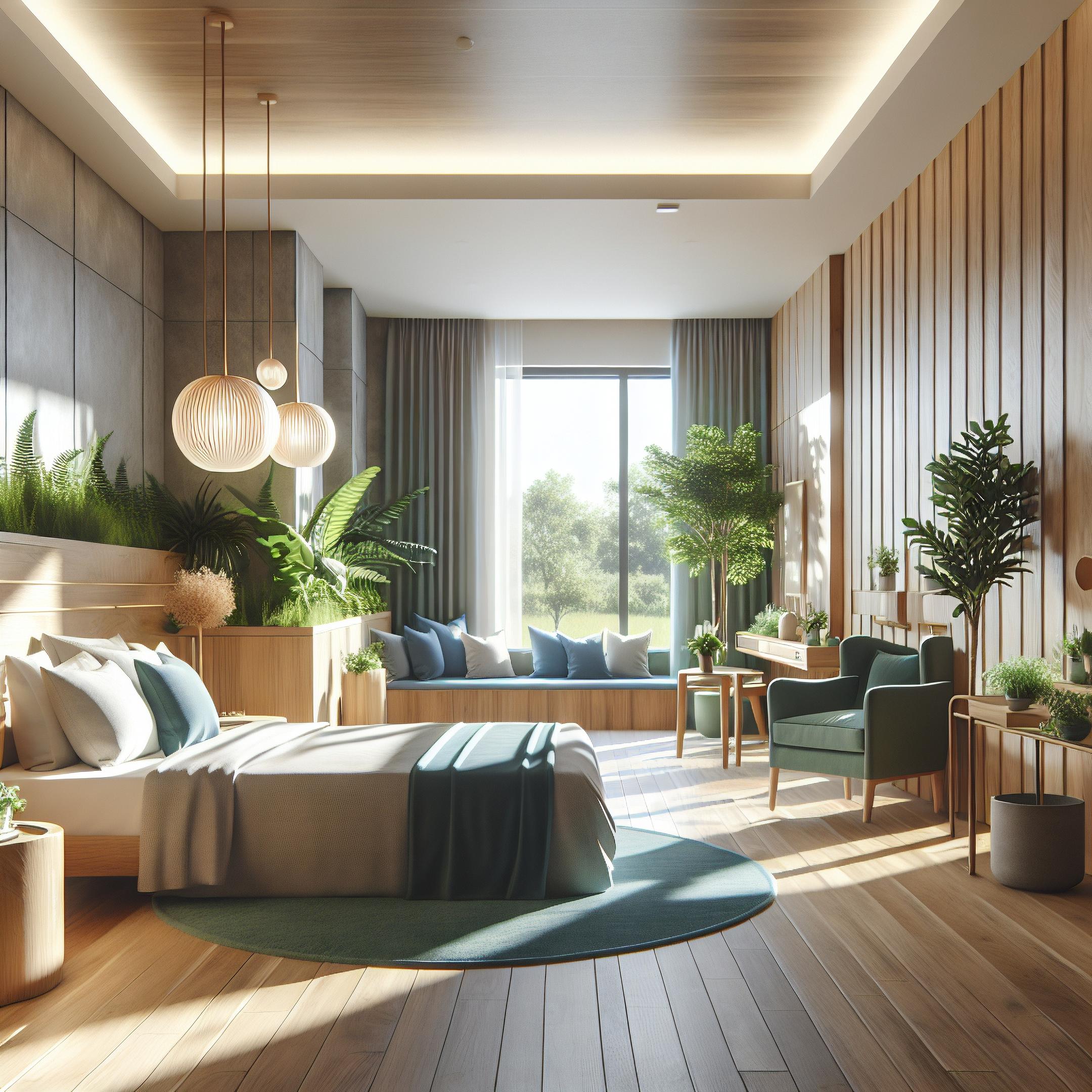
Firstly, biophilic design promotes a visual connection to nature. Typically, this is seen through the use of windows, water features, and plants. Natural patterns and shapes are incorporated with nature-inspired textures. Living systems are integrated with the use of indoor plants, outdoor access to open spaces and maximising ventilation and light. Natural light is a vital ingredient.
The Science Behind the Thinking
Since the beginning of time, human beings have been connected with the earth – to the land, the sea, the sun, and the rain. We need a connection to nature – a human connection.
Of course, the benefits of ‘getting some fresh air’ are well known. Everybody knows that getting outside and being at one with nature is good for our well being. We all know the health benefits. We all realise that spending time with nature will bring psychological benefits and stress reduction.
However, while we have an innate tendency to be at one with nature, our psychological health and physiological health aren’t typically at the front of our minds day to day.
The problem can be the pace of modern life. Not only that, we spend most of our lives inside a building: the home, the office, shops, schools, hospitals, hotels, and so on.
So much of our time is spent surrounded by white walls and fluorescent lights. Stark and minimalist plastics abound. And for city dwellers, we are surrounded by concrete and asphalt.
Sometimes it can feel like our connection to the outside world is a long, long distance away.
And this is where biophilic design comes in…
Love of Life and Living Things
Biophilia is basically the love of life and living things.
So, for urban planning, it’s all about parks, trees, and promoting biodiversity.
For interior design, it can be about bringing plants inside; flowers, textures, green walls, and natural light.
What is a Biophilic Design Kitchen?
You might be thinking: What has this all got to do with kitchens?
And it’s true – the architectural perspective of urban planning and the sustainability concepts and the material connection and natural analogues of a biophilic space might seem a million miles removed from the decision you are trying to make about a new kitchen design for your home.
But, actually, it’s a lot closer than you think.
Natural Elements and Contemporary Interior Design
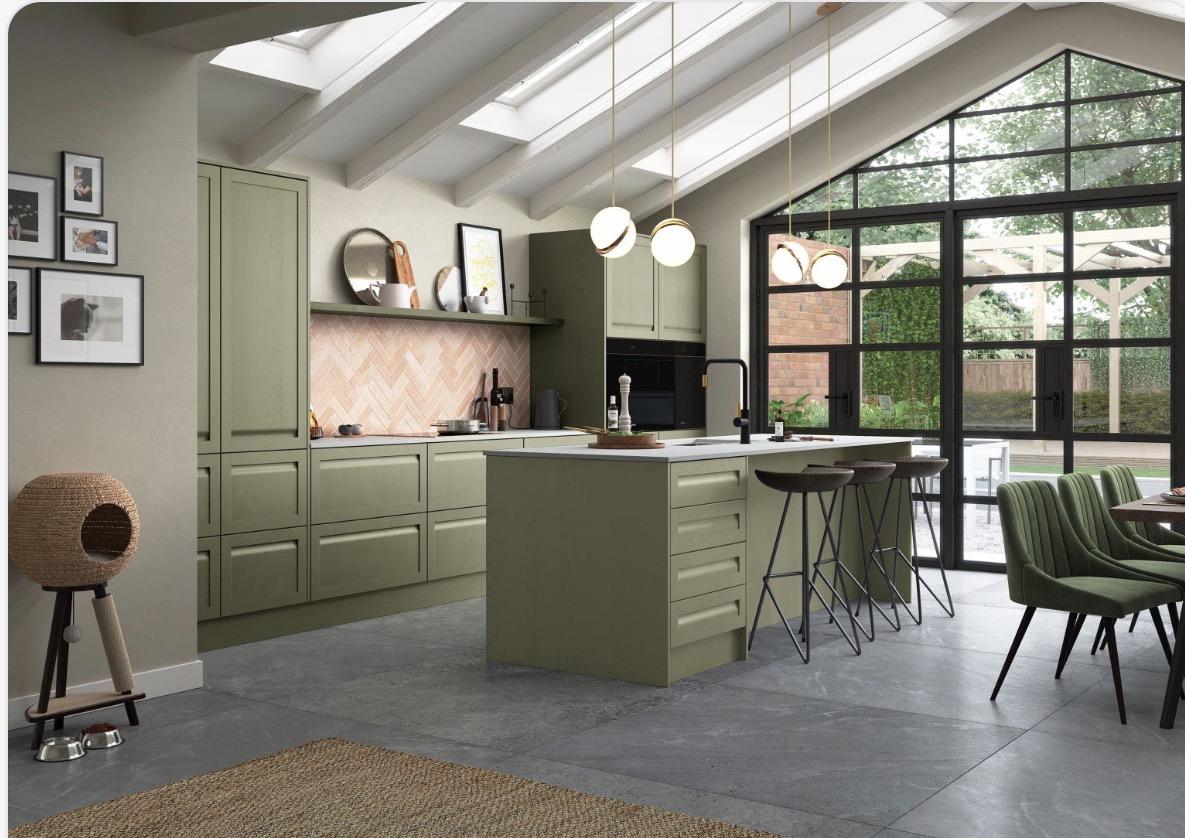
Design trends come and go but in recent years one of the most enduring and prevailing themes in interior design has been with the desire to connect with nature.
‘Bringing the outside indoors’ has been a regular soundbite summing up modern design trends. Google search trends have seen a steady rise in the likes of ‘Best Kitchen Plants’ and ‘Best Indoor Plants’.
In truth, the natural world has been a major influence on interior designers for years now – especially through the choice of colours and materials.
Now, biophilc design is taking things to the next level.
Principles of Biophilic Kitchen Design
What are the core principles behind biophilic kitchen design?
Essentially, it’s a lifestyle approach and much more than a simple aesthetic choice. This is because we now recognise that the decor and designs in our home can boost our physical and mental wellbeing.
There are many ways to incorporate biophilic design into your home.
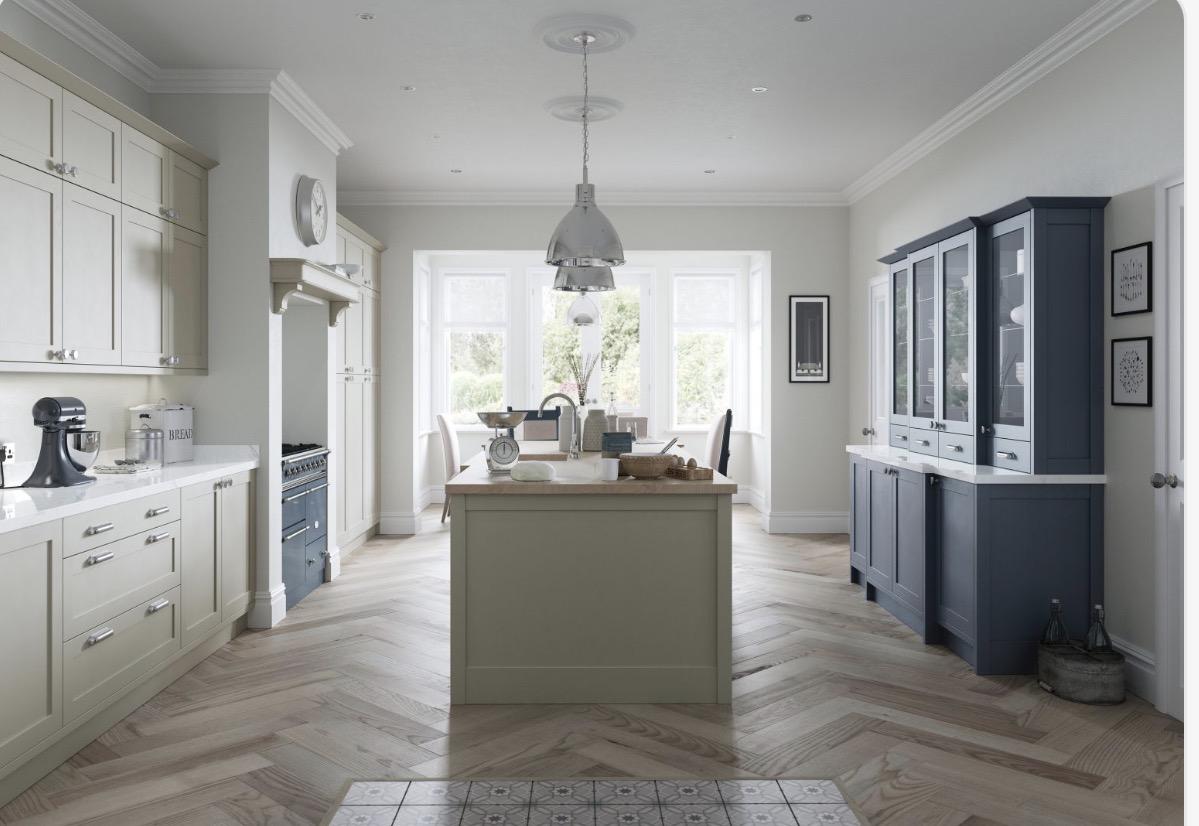
The core principles are the use of natural materials – stone and wood – and organic shapes and greenery.
Where to Start with Biophilic Design?
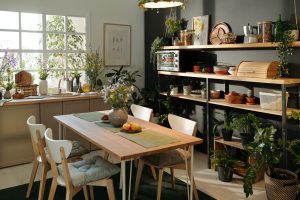
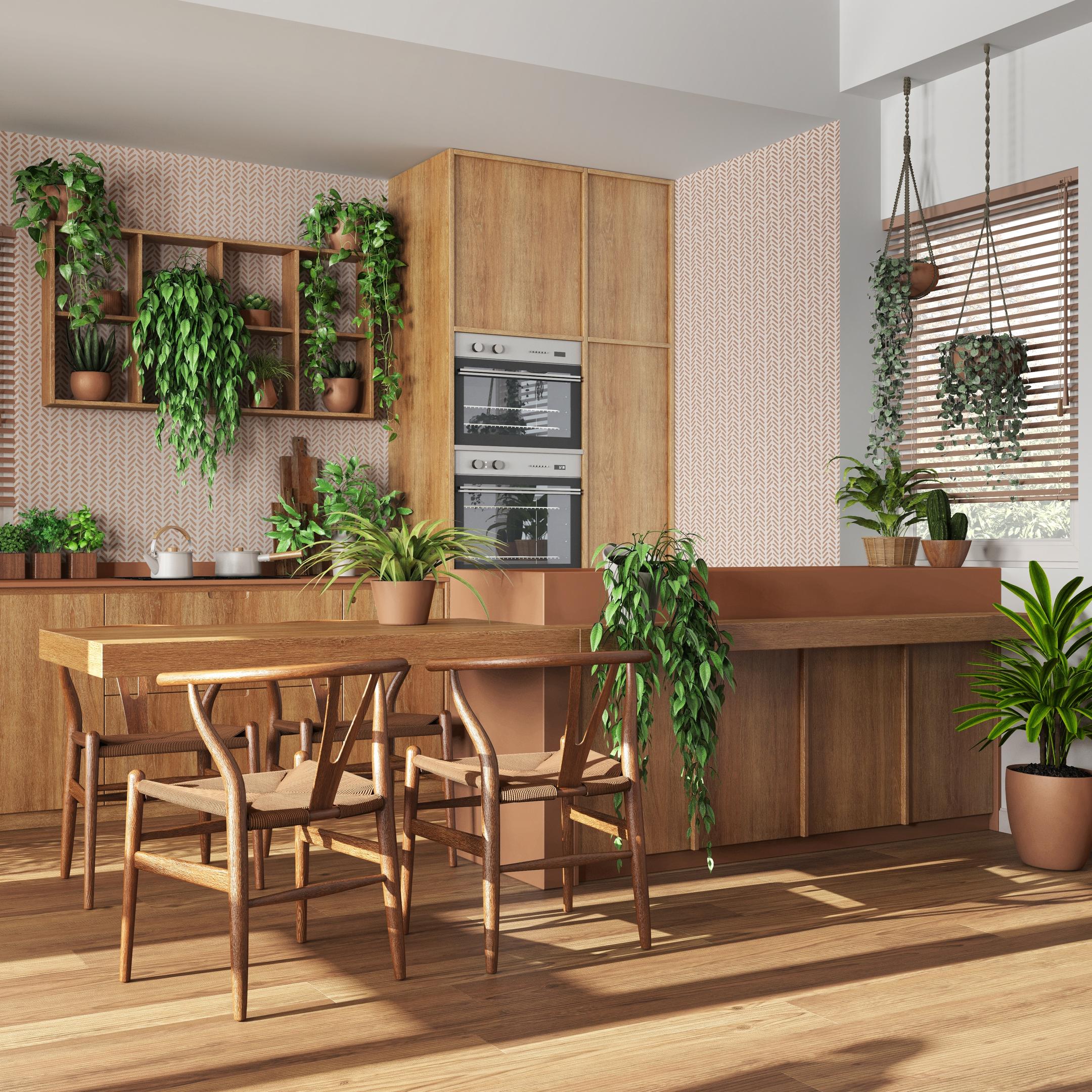
The easiest way to start to incorporate biophilic design into your kitchen would be to add greenery and plants to your shelves.
If you can, let in plenty of natural light to bring the natural elements into focus. Natural light will brighten the space and enable plants to thrive.
Choose Kitchen Plants that are Low-Maintenance
With anything to do with the home, you don’t really want to add things that increase your workload.
When it comes to low-maintenance plants, the likes of pelargoniums and genariums are great picks. Herbs are always a good addition too, and – of course – they can be used in cooking and cocktails!
The windowsill is the perfect location for your impromptu herb garden. This will allow them to soak up the sun. Just remember to water them frequently as they require plenty of hydration.
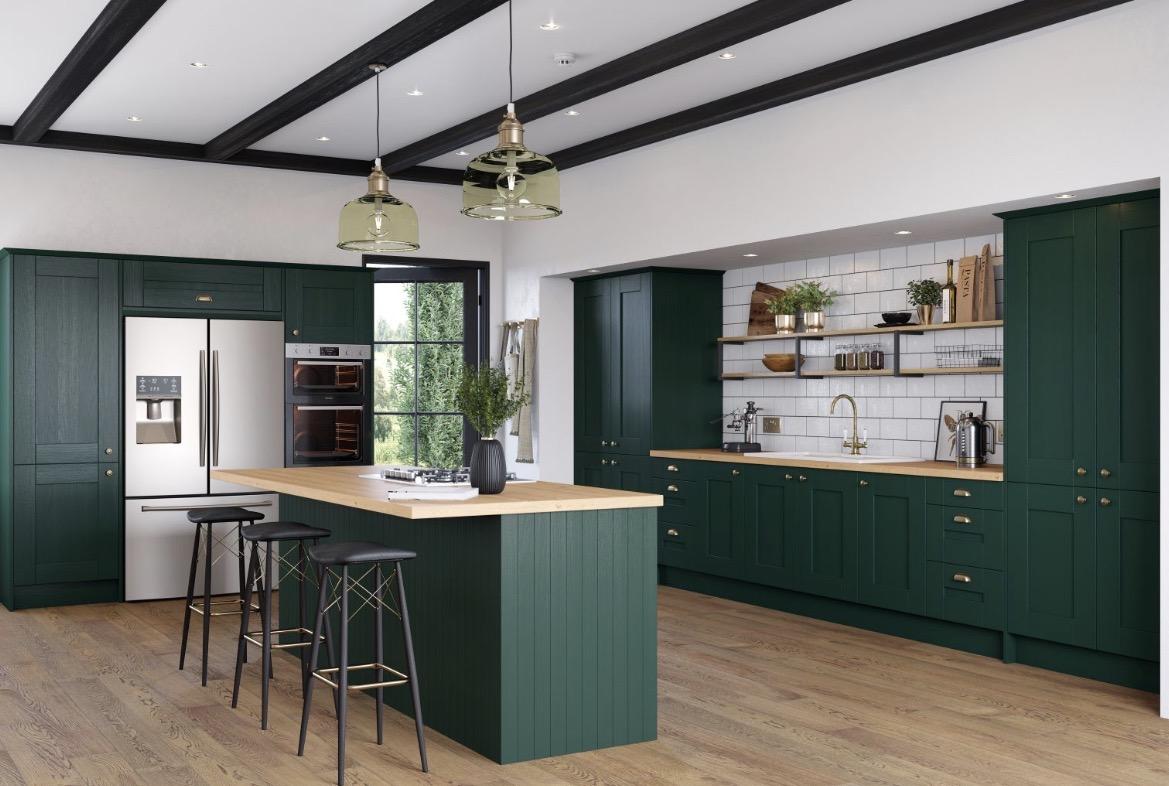
Calming Colours – Ideal for Biophilic Kitchens
There is more to biophilic design kitchens than simply filling the space with plants, of course.
The colours you choose for the cabinets, doors, walls and worktops can have a significant bearing too.
Natural materials, such as wood (or wood effect) will create spaces with the same impression as well.
The tone you set with your chosen colour palette will add to the overall effect. Calming colours and earthy shades are the best bet – but you have lots of options to help you create a truly biophilic décor.
Create Spaces that Bring the Natural World to Mind
Your biophilic design doesn’t just end at the plant life you use – it’s about the tone you set with your chosen colour palette as well.
Nature and the natural world are great sources of colour inspiration.
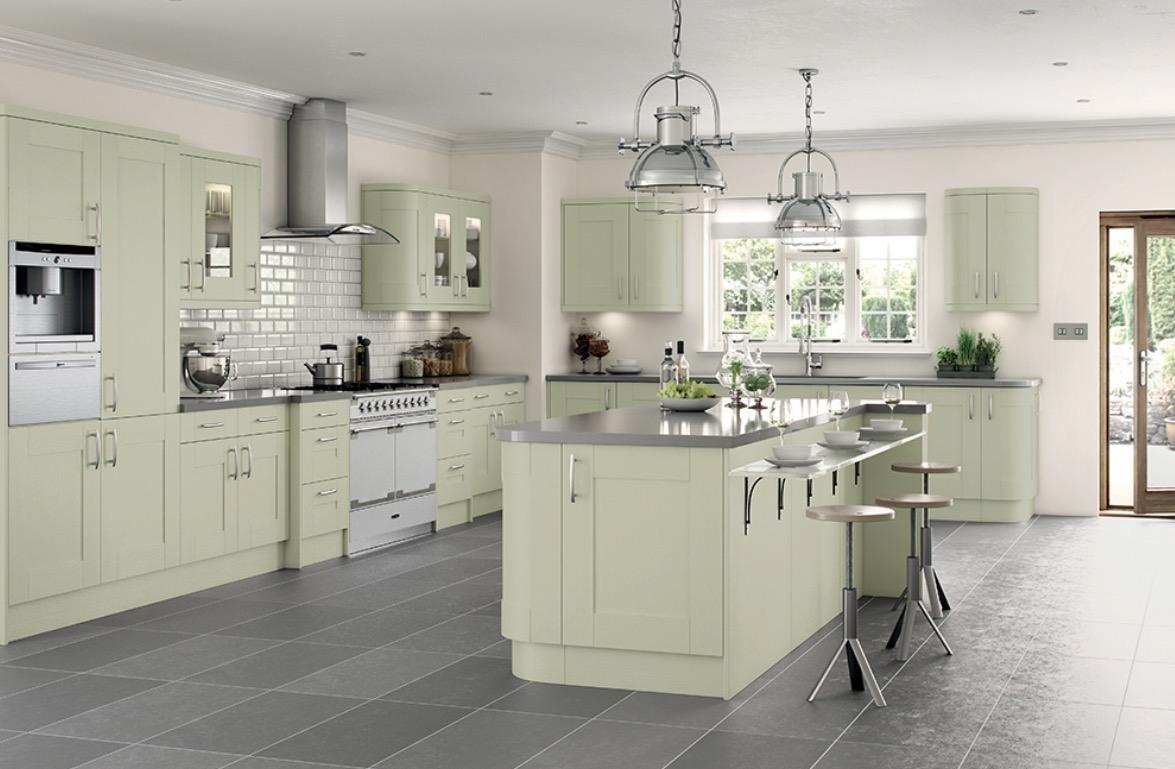
Greens – from leafy greens to sage – are obvious choices. They have a natural connection to plant life and greens are possibly the most relaxing of all colours as well. Greens go well with other colours, such as grey – indeed, any warming neutral tones.
Similarly, warm and comforting shades of white are another great choice. Working well to emphasise natural light in the space, white is also an excellent pairing for natural materials and textures, such as stone and wood.
if you are thinking of using accent colours, the best advice is not to be too bold, as this could overpower the space. Deep and warm shades, such as rust or terracotta will bring the best out of natural tones.
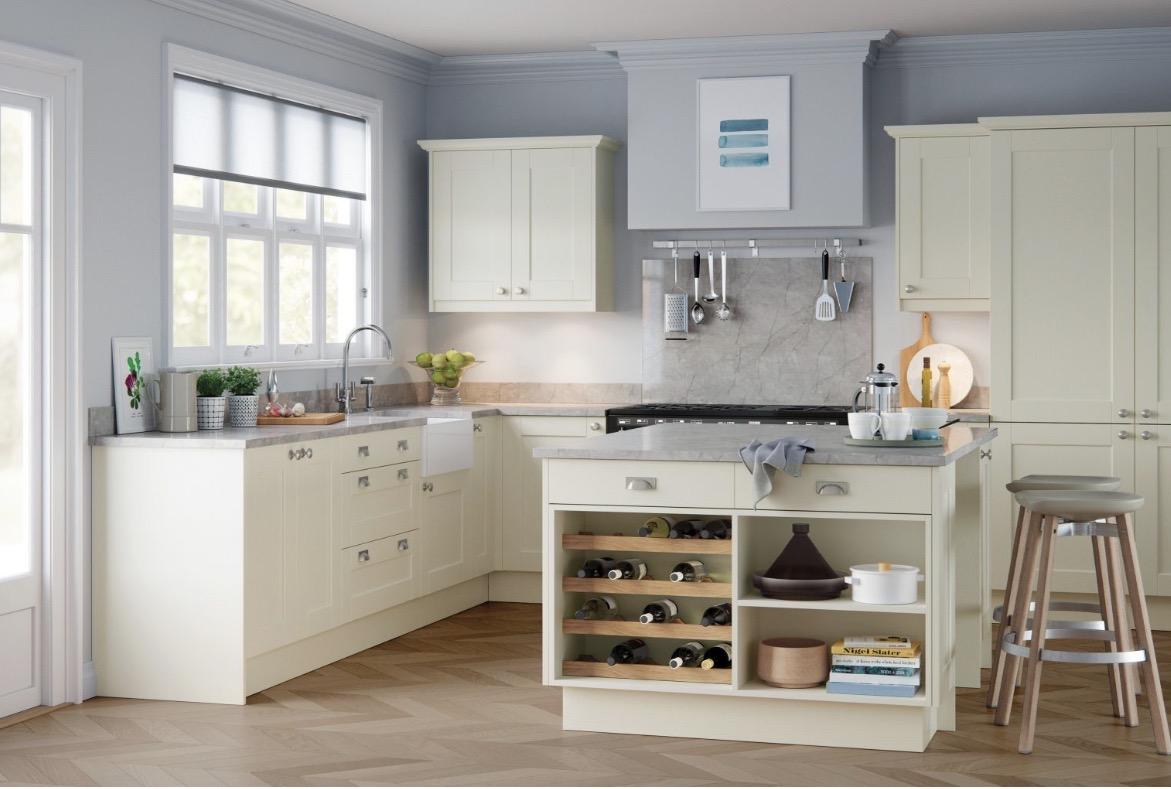
Nature-inspired Surfaces
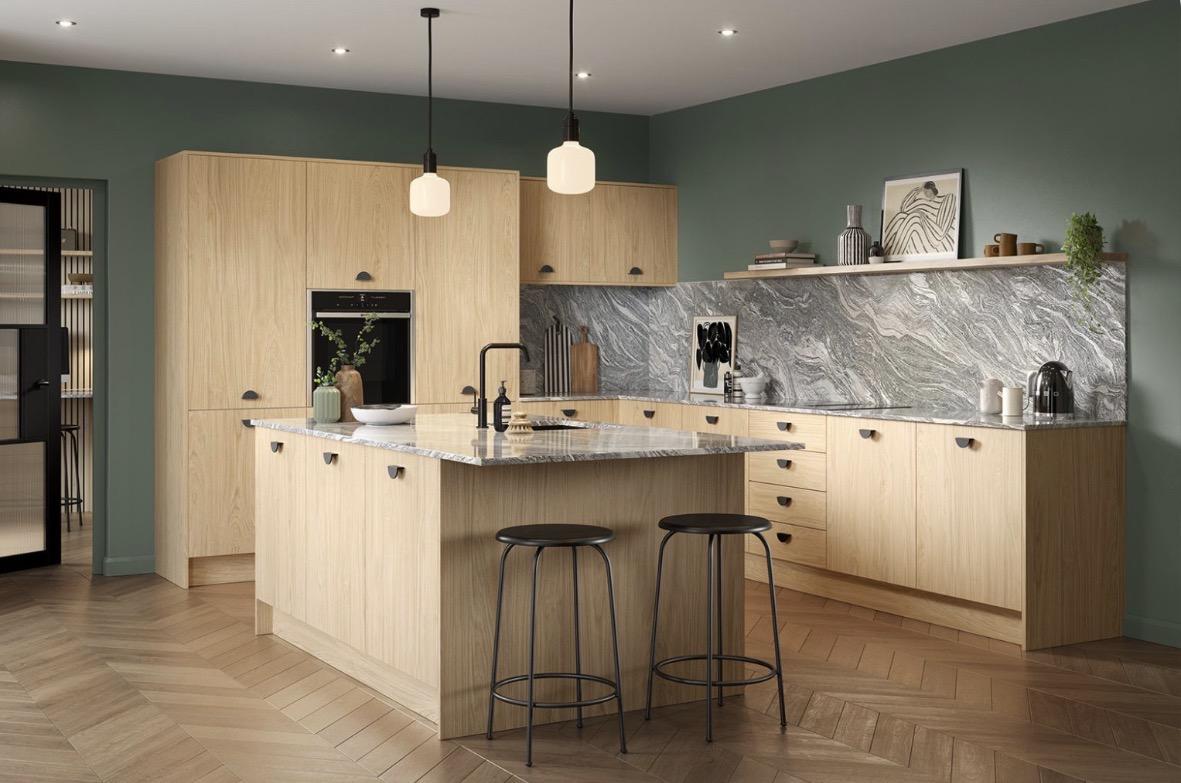
There is a growing trend for using reclaimed wood for countertops and furniture. This is guaranteed to add character and charm to any kitchen.
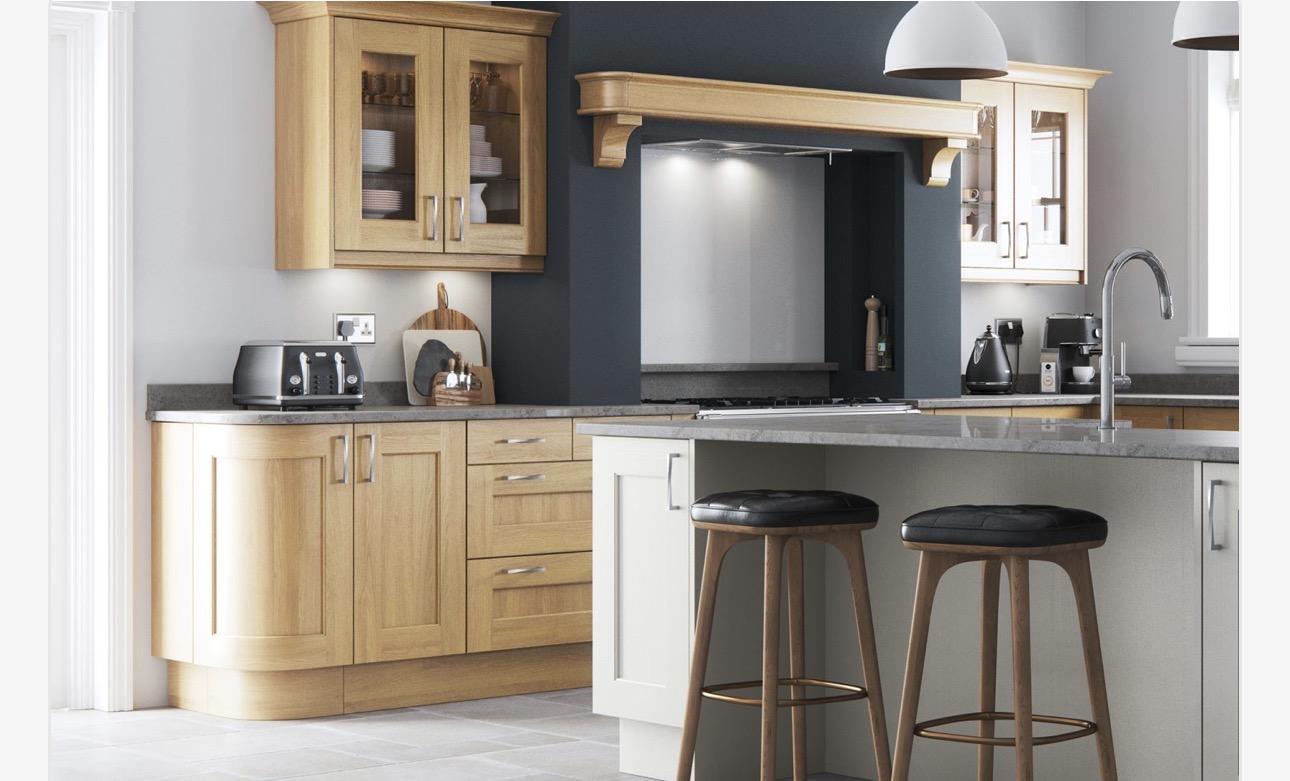
If you can think of a way to incorporate wood or stone into your biophilic kitchen design then you will be onto a winner. These are materials that are found everywhere in the natural world in natural landscapes so they work beautifully in any biophilic design.
Wood and stone will always be an appealing alternative to the starkness of plastic.
A Bright Kitchen With Balance
Natural light is a vital component of any biophilic kitchen design – but you can’t rely entirely on it – not least because of the hours of the day when the sun isn’t up.
Layered lighting effects work best. LEDs with warm hues can extra depth to the space.
For kitchens where your natural lighting is limited, taking measures to reflect and bounce light around the room is always a good idea. Metallic accents and mirrored backsplashes do the trick superbly.
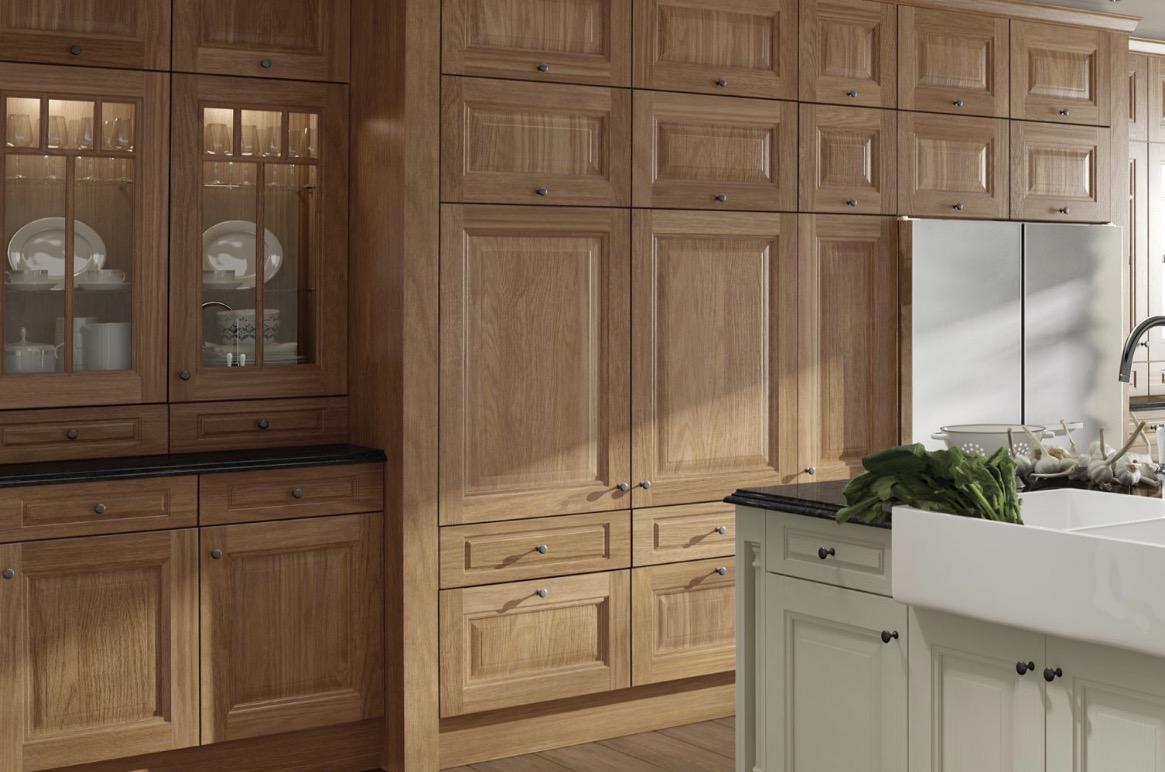
Final Thoughts: Biophilic Design – A Win-Win
However you look at it, a biophilic design kitchen is a win-win situation.
Not only will you have a kitchen that turns heads because of its great look, the physical and health benefits of bringing natural patterns and the natural world into your kitchen space are numerous.
Taking a biophilic approach to your kitchen will create a relaxing and calming environment. In homes with limited garden space, a biophilic design kitchen is a brilliant way to bring the natural world inside. Letting natural light and natural patterns into the kitchen space will de-stress you and counteract the pace and business of modern life. Give your mental health and physical health a massive boost with a biophilic design.
Are you ready to see how biophilic design can transform your kitchen? Get in touch if you have any questions.