The Importance of Good Lighting in The Kitchen
The kitchen is much more than a place where meals are cooked. In a kitchen/diner layout, the kitchen is also the place where the family gathers to enjoy meal-times – from breakfast to dinner – together. It can be the place where the kids do their homework. Not only that, the kitchen can also be the place where friends and family meet for dinner parties and drinks. It can be a food preparation hub and an entertainment hub too. The kitchen is also a room where good lighting can make all the difference.
Good Lighting: Why is it so important in the kitchen?
It’s true that lighting is an important factor on every room in the home. However, it’s also true to say that it is especially significant in the kitchen. If you are designing a new kitchen or considering a revamp, how the space is lit is certainly something that should not be overlooked. The type of lights you choose and where they are placed in the kitchen will have a large bearing on how comfortable and aesthetically pleasing the space is.
Obviously, at a basic level, it is important that the food preparation and working areas of the kitchen are brightly-lit. First and foremost, this will ensure the area is safe – but it will also make everything much more visible and clearer. You need food preparation to be easy and efficient. The only way to achieve this is with strategically-placed lighting. This makes it easier to keep the kitchen clean as dirt and debris is more visible and therefore easier to keep on top of. In short, well-considered illumination can transform a dingy and dark kitchen space and set the benchmark for the rest of the home. Your choice of light makes the kitchen feel brighter and bigger, and far more appealing.
The importance of ambience
Ambient lighting – also known as indirect general light – effectively creates a base level of illumination in any space. During the day, ambient sunlight will enter the kitchen in indirect streams through the windows. In the evenings, however, ambient lighting can be created by a variety of options for fixtures that can be employed to illuminate the space.
The principle of ambient light is that it illuminates the space with an appealing glow rather than the harsh and abrasive beam from exposed bulbs. Good ambient uillumination can be mainly functional, and it can be decorative too. For example, Chinese lanterns can be the ideal choice to illuminate small to medium-sized spaces. A more subtle option could be the likes of torchiere lamps. Here the lamps cast a broad beam in an upward direction.
The ideal combination in the kitchen is to blend ample lighting with strategically positioned task lights. Ideally, a single flip of a switch should illuminate the entire space. The wealth of options you have to help you achieve this allows for creativity and an expression of your own personality to be stamped on the space.
Types of Ambient Lighting for the kitchen
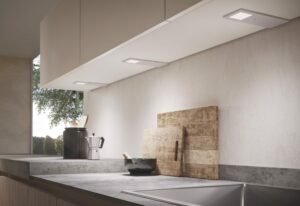
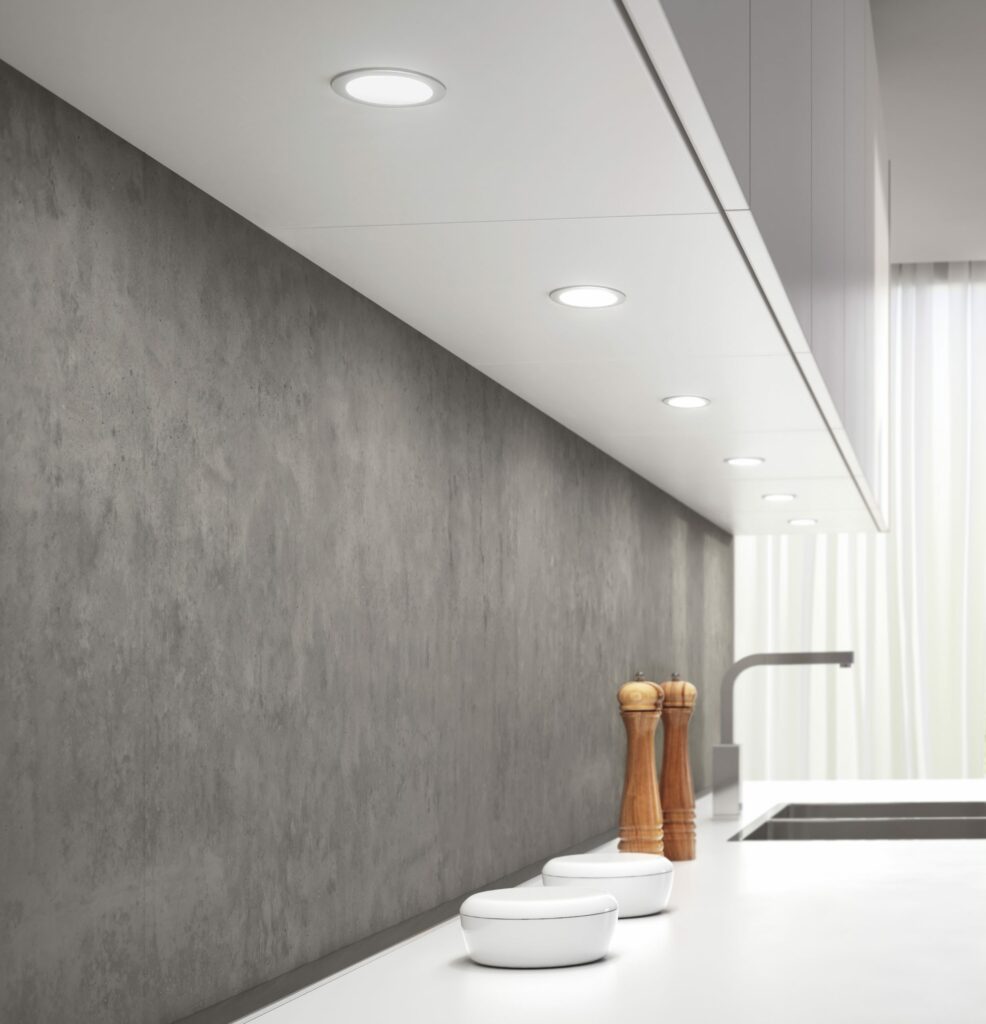
Flush and semi-flush mounts are a perennial favourite for the kitchen. Set flush to the ceiling or just below it, they provide a large wash of illuminated light. Under-cabinet lighting provides a soft glow that creates an ambient atmosphere. Under-cabinet lights can also be an excellent way to increase visibility in areas where food preparation takes place. Recessed lights are another great choice of ambience in the kitchen. Recessed kitchen lights provide even – but subtle – illumination to a broad area. Whether your kitchen style is contemporary and modern or rustic and traditional, recessed lights can be easily integrated into the design.
Chandelier lights add a touch of exotic sparkle to the kitchen. Pendant lights have become a common feature of kitchen design plans. They benefit from having a wide range of appealing options to choose from. They are also versatile as pendants can cast a glow either up and down or simply downwards. Bar lights (often chandelier-style) has become a popular choice to be hung over a kitchen island, or the family dining table in a kitchen/diner layout. Typically, the bars have pairs of lights – usually up to eight. Bars of ambient lights are a favourite in ultra-modern kitchen designs. They make a real design statement but are also very easy on the eye. Last, but not least, dimmer switches are another must-have ambient accessory. The ultimate in flexibility, dimmer switches enable you to turn up the brightness when you are cooking and preparing food – and then soften the mood down to create an entirely different mood afterwards.
More than just a practical necessity
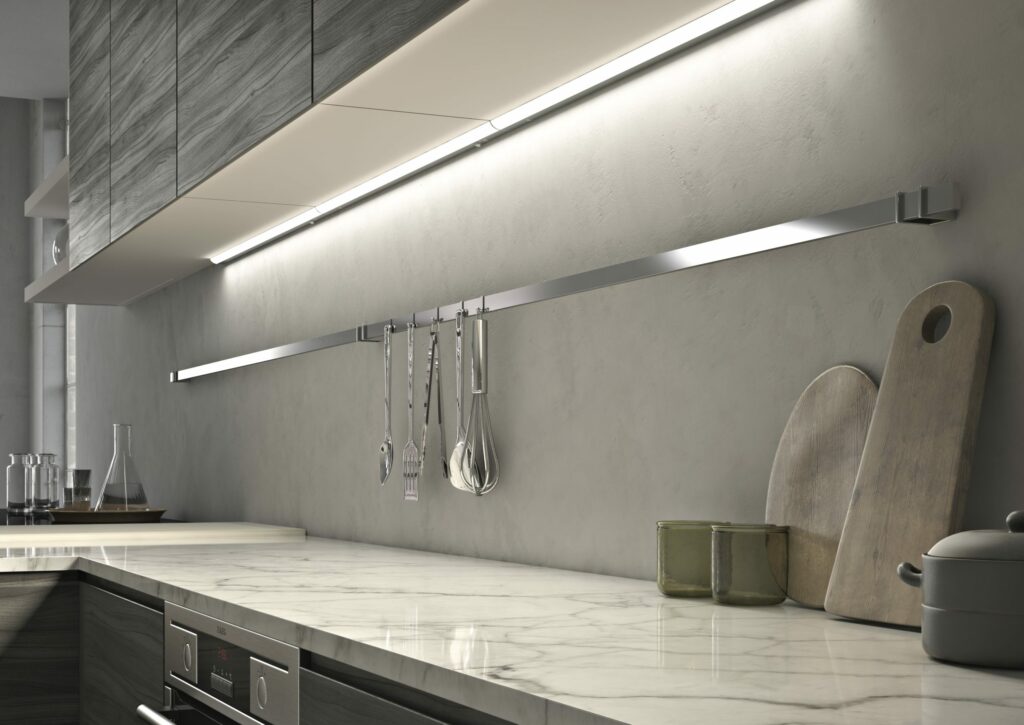
Task Lighting is placed in specific areas where you need to see what you are doing. However, it can also bring a very pleasing aesthetic look to the space too. The soft glow that under-cabinet fixtures can bring is a real benefit. It is also important to remember that the colour, direction, and strength of the task lights you choose can all make a real difference. Although most cookers include their own lights, adding your own strip lights to give you increased visibility for food preparation can be a good idea. There’s a misconception that task lights are purely practical and functional – but it certainly doesn’t have to be boring.
Accent lighting – The third layer
One way to approach lighting in the kitchen is to see it as having three layers. Ambient (general) light is the first layer. Essentially, it is the natural light that comes through the windows. Ambient light fixtures substitute for natural light when it is dark. Although people understand the need for ambient lighting, many people stop there. You really need the second layer – task lighting – to illuminate and give you the visibility to perform a range of tasks.
But there is a third layer of lighting too – accent lighting. A lot of people think of accent lighting as mood lighting, but it really is much more than that. Still, accent lighting is the type of lighting that is most overlooked in the kitchen.
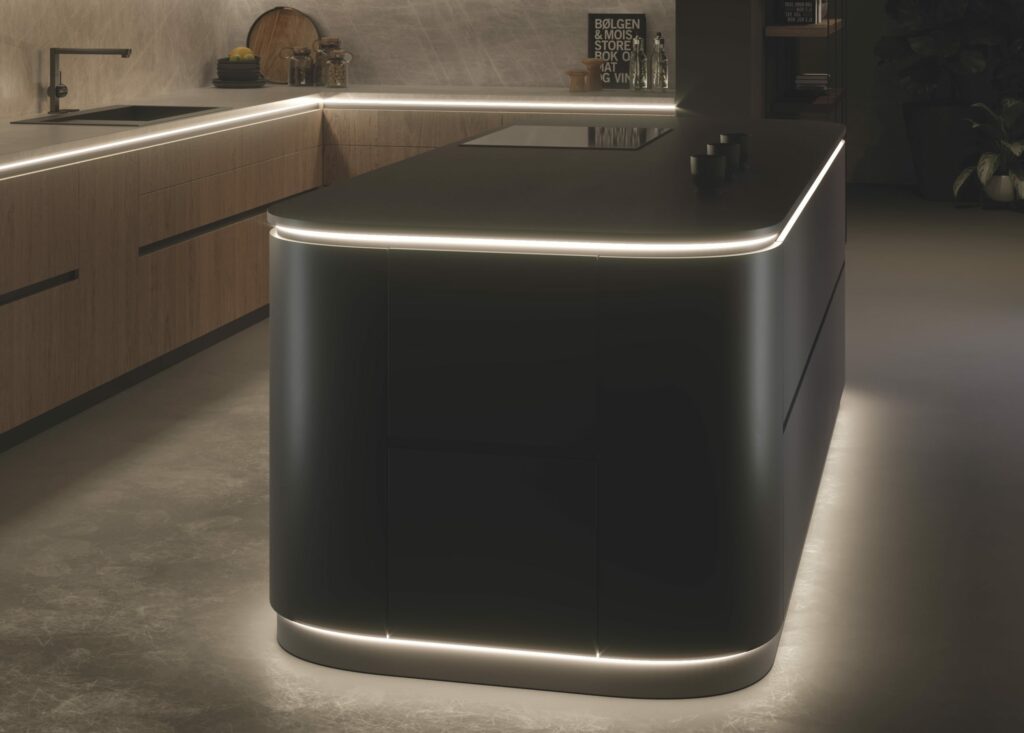
Accent Lighting can be used to highlight features in the kitchens. This could be a set of hanging lights over a breakfast bar or strip lighting to the inside of glass cabinets. In short, accent lighting can be used to accentuate the parts of your kitchen design that you like the most and want to show off.
The Verdict: How lighting in the kitchen impacts your home
The key takeaway here is that you should not make the mistake of underestimating the importance of having plenty of light in your kitchen. And it is a common mistake that many homeowners make. Even homes that are blessed with plenty of natural light need effective lighting on grey days and in evening. It’s always better to have too much light rather than not enough.
The bottom line is that in terms of functionality and practicality, lighting is essential. Prepping food often involves using sharp implements and, obviously, the hobs and oven can get very hot! Safety is paramount and not being able to really see what you are doing is a genuine recipe for disaster.
Consider the three layers of lighting
Ultimately, the most effective kitchen lighting will be a design that incorporates each of the three layers of lighting: ambient, task, and accent. The real trick is to create a cohesive lighting plan for the kitchen where all the three elements and layers blend together seamlessly and effortlessly.
Lighting doesn’t have to be boring either. It is more than simply a utilitarian consideration. Lighting can be a focal point of the kitchen. It can be beautiful as well as functional.
Get in touch with the Kitchen Warehouse team if you have any questions about lighting in the kitchen. Our friendly and expert team are always on hand to offer advice and guidance wherever we can.